


Sequence® World
3.622.00 Reviews
App Specs
- Version
- 2.1.1
- Updated On
- License
- Free
- Downloads
- 10,000+
- Developer
- Goliath BV
- Categories
- Board
- Platform
- Android
Screenshots

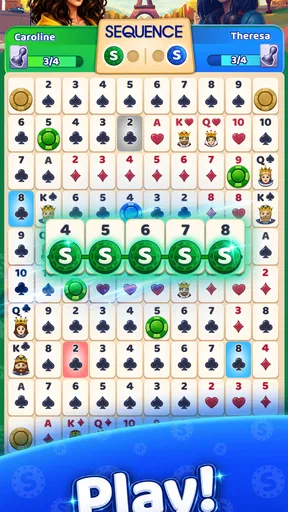


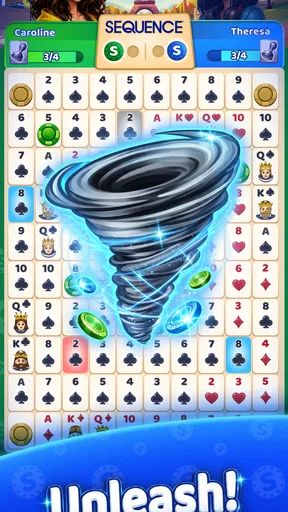



 Analysis by AppCompare
I approached Sequence® World as the kind of board game that has to solve a very practical problem: can it make a familiar tabletop experience worth opening again after the first few sessions? The answer, in my experience, is yes for players who enjoy planning around cards and board positions, although its lasting appeal depends heavily on how often you have people willing to play with you. This is a free board game from Goliath BV, aimed at Everyone, and it offers a convenient way to bring the Sequence experience to a phone or tablet rather than waiting for a physical board to be available.
The first impression is easy to understand. Sequence is built around a simple idea: use cards to claim spaces and work toward connected lines on the board. That basic structure is approachable, but it still creates small decisions that feel meaningful. I never need a long tutorial to remember what I am trying to do, yet I still have reasons to pause before playing a card. Should I advance my own pattern, block an opponent, or hold a useful card for a better moment? That tension is the main reason this adaptation can keep a casual game from feeling completely automatic.
How the first week feels
During the first few sessions, the appeal comes from the balance between familiarity and convenience. Anyone who already knows the tabletop game can get into a match quickly, while a newcomer can understand the objective without studying a complicated rulebook. That makes it suitable for a short evening game, a relaxed break, or a family session where not everyone wants to learn a dense strategy title.
I especially like the way the board encourages players to look beyond their next move. A card may appear useful because it places a marker close to a possible line, but that same move can reveal a threat that another player can interrupt. The result is a game that remains light in presentation while asking for more attention than a purely luck-driven card game. It is not a deep strategy simulator, but it does reward awareness and timing.
The digital format also removes some of the ordinary friction of a physical set. There is no need to lay out a board, sort cards, check whether a move was legal, or remember whose turn comes next. Those conveniences matter when I want to play spontaneously. They also make the game more approachable for someone who likes board games but does not want to manage pieces and cards at the end of the night.
One useful habit is to treat the opening turns as information gathering rather than a race. I try to notice which areas of the board are becoming contested and which cards may be more valuable later. A quick move is not always the best move, particularly when placing a marker creates an obvious target. Thinking in terms of future blocking opportunities makes the early game feel less random and helps prevent the common mistake of spending a flexible option too soon.
That is one of the first non-obvious strengths here: the rules are easy enough for a mixed group, but the board still creates a reason to watch other players. A child, a casual player, and a more experienced board-game fan can sit at the same match without the game becoming entirely passive for the stronger player. The gap in skill is still present, of course, but the straightforward rules keep it from becoming intimidating.
Worth Reading Before You Choose

Flipboard Shows What News Apps Must Do Beyond the Feed

Switching to Android Auto Means Rethinking Your Driving Routine

Google Calendar Makes a Crowded Week Easier to Manage

Ludo King Makes the Most of the Minutes Between Plans

Baby Panda World Brings Quick Play to Modern Phones, but Its Game Library Feels Busy

ESPN’s Live Game View Makes Following Close Games Easier
There is also a useful distinction between playing for a quick distraction and playing for a social routine. If I have only a few minutes, the game can provide a compact mental break. If I am playing with friends or family, the value comes less from the individual match and more from the conversation around it: explaining a move, spotting a missed opportunity, or reacting when a carefully built line disappears. That social layer is important because it is what can carry the game beyond its initial novelty.
The store figures suggest a modest but real audience, with over ten thousand installs and an average rating of 3.6 from around seventy ratings. I read that as a sign to keep expectations sensible. This is not a universally adored digital board-game experience, and the rating leaves room for rough edges or preferences that will not suit everyone. Still, it has enough presence to be more than an experiment that nobody is using.
Who will enjoy the opening sessions
I would recommend the first-week experience to people who already like turn-based board games, especially those who enjoy making small positional decisions without spending an hour learning systems. It is also a good candidate for households that own or know the physical Sequence game but want a portable alternative. The age rating of Everyone makes it suitable for broad family use, though the actual enjoyment will still depend on whether each player likes patient, turn-based play.
A realistic everyday scenario is a family waiting for dinner or traveling together. Instead of bringing a box with loose cards and a board, one person can start a digital match and let everyone take turns on the same device or through whatever play arrangement the app provides. The important point is not that it replaces every physical game night. It is that it lowers the barrier to starting one when the physical version is in another room, at home, or simply unavailable.
Players who want constant action should be cautious. Sequence has pauses built into its character. You spend time evaluating the board, and a match can feel slow if everyone is indecisive or if the group prefers rapid reflexes. Someone looking for a solo challenge with elaborate progression, a competitive ladder, or a large variety of rules may find this adaptation too focused on the central board-game loop.
What keeps it useful after the novelty
The month-to-month question is harder than the first-week question. Learning the rules is not the challenge; continuing to find satisfying reasons to return is. For me, the recurring value comes from changing opponents and changing priorities rather than from a constant stream of new content. A familiar board can feel different when I am facing a cautious player who blocks early, a bold player who builds quickly, or someone who treats every turn as an opportunity to create a trap.
That makes it a better recurring choice for a household or friend group than for someone playing alone in isolation. If the same people return regularly, the game develops a small local history. You remember who takes risks, who saves useful cards, and who tends to overlook a threat while pursuing a line. Those patterns create an informal metagame without requiring rankings or complicated progression.
My practical advice is to use a rotation instead of playing endless matches in one sitting. A few games spread across the week can preserve the feeling that each board deserves attention. Long sessions can expose the limited core more quickly, especially when the same positions and decision patterns begin to repeat. The app works best as a dependable short-form activity, not necessarily as the only game on a device.
Another useful approach is to set a small personal goal for each session. I might focus on improving my defensive reading, avoiding premature commitments, or recognizing when an opponent is building toward a line that can be interrupted. This gives familiar matches a purpose. It also makes the game more rewarding for players who do not need elaborate unlock systems to feel progress.
The game’s free price helps with this kind of experimentation. I can try it without committing money up front, which is valuable when I am unsure whether my family or friends will actually return to it. There are in-app purchases ranging from $1.99 to $49.99 per item, so I would still pay attention to the purchase flow and keep expectations clear for younger players using a shared device. The free entry point is attractive, but it does not mean every part of the experience is necessarily free of commercial prompts.
Version 2.1.1 gives the app a current software identity rather than leaving it presented as an untouched first release. I would not choose it solely because of the version number, but it is reassuring when evaluating whether an app is being maintained at all. For regular use, I would keep the application updated through the normal store process and check that the device remains compatible before planning a trip or family activity around it. Its minimum operating-system requirement is 7.1, which covers a broad range of older devices.
The developer, Goliath BV, is closely associated with the Sequence brand, and that matters here because the adaptation has a clear identity. It is not trying to turn the game into an unrelated arcade product. The strongest reason to keep it installed is precisely that it stays close to the recognizable board-game concept while making access easier.
Where recurring value starts to weaken
The main limitation is variety. A focused adaptation can be pleasant because it is easy to understand, but the same focus can become repetitive for players who need frequent changes in rules, boards, objectives, or presentation. I would not install this expecting the breadth of a large digital board-game collection. It is one recognizable experience, and its longevity depends on whether that experience continues to produce interesting matches.
There is also a difference between strategic depth and strategic repetition. At first, I notice new possibilities because I am still learning how the board behaves. Later, I may find that my decisions are variations on familiar patterns. That is not a flaw for a casual game, but it is a real trade-off. Players who enjoy refining one compact system may appreciate it; players who measure value by the number of modes may move on quickly.
Another point to consider is the importance of the group. The game’s social usefulness can be a strength, but it can also be a weakness if the people around me are not interested in turn-based board play. A digital version cannot manufacture enthusiasm from a reluctant group. If I mostly play alone and want a strong long-term challenge, I would compare it with a more feature-rich strategy title before deciding that this is the best use of storage space.
Maintenance, friction, and the reasons people may stop playing
The maintenance burden is fairly light in the everyday sense. There are no physical pieces to lose, no table to clear, and no cards to reshuffle by hand. That makes the app convenient for repeated short sessions. The more important maintenance is personal: keeping the game available for the right social moment and preventing it from becoming one more icon that I open once and forget.
For families, I would establish a simple routine. Keep the device charged, decide whether everyone is comfortable sharing one screen, and make sure younger players understand that optional purchases cost real money. Those steps sound obvious, but they are the difference between a smooth casual game and an interruption that ends the session. Because the game is free to start and includes paid items, I would also review the device’s purchase controls before handing it to a child.
Storage is unlikely to be the deciding issue for most users, but attention is. Mobile devices are crowded with games designed to demand frequent returns. This one has to earn its place through reliable social use rather than constant notifications or a never-ending reward loop. I consider that a positive if I want a calmer board game, but it means the app may disappear from my routine when my group’s schedule changes.
Fatigue usually arrives in three forms. The first is repetition: after enough matches, the central patterns become familiar. The second is waiting: a thoughtful opponent can make a simple game feel slower than expected. The third is expectation mismatch: someone may download it hoping for a deep solo strategy experience and discover that its real strength is shared, turn-based play around a known board.
I also think the digital version can lose some of the physical game’s atmosphere. A tabletop board naturally invites people to lean in, point at a space, and talk through a move. On a device, the same interaction can feel more private or less visible, especially if the screen is small. That does not make the app ineffective, but it affects how well it works as a group activity. A larger screen or a comfortable shared setup will make the experience more enjoyable than passing a phone around awkwardly.
There is a subtle strategic fatigue that deserves attention. When players learn that defensive moves are often safer, matches can become cautious. If everyone waits for a perfect opportunity, the game may lose momentum. I find that agreeing informally to keep turns moving helps, particularly with casual groups. This is not a rule change; it is a social adjustment that keeps the board from becoming a long sequence of overthinking.
On the other hand, that same tension can be the reason a group returns. A close match often produces the kind of small frustration that turns into “one more game.” The key is whether players enjoy discussing decisions afterward. If they do, the repetition becomes refinement. If they do not, the fixed structure becomes more noticeable with every session.
When another option makes more sense
I would choose the physical Sequence set when the goal is a traditional family activity with a visible board, shared pieces, and a more tactile atmosphere. The physical version is also preferable when several people want to look at the board simultaneously without crowding around a phone. The app wins on portability and setup time, not on replacing every quality of a table game.
I would choose a broader digital board-game collection when my group wants several different experiences in one place. A collection is more suitable for players who quickly exhaust a single ruleset or want to switch between strategy, wordplay, dice, and card games. Sequence® World is more focused, and that focus is either its charm or its limitation depending on what I expect.
For competitive players, I would look for a title with clearly developed long-term systems, provided those systems are the priority. This game is better suited to informal competition where the satisfaction comes from reading the board and beating people I know. It is not the first choice I would make for someone searching for a serious esports-style routine or a complex campaign.
My long-term verdict
After the initial novelty fades, I think Sequence® World earns lasting space when it has a clear role: a quick, familiar board game for family members or friends who may not want a more demanding title. Its free entry point makes that role easy to test, and its Everyone rating supports broad household use. The core decisions are simple to teach but not completely empty, which gives repeat matches more substance than a purely automatic casual game.
Its long-term weakness is equally clear. The app does not need to be bad to become repetitive. A single focused board-game experience will not satisfy players who need constant novelty, deep solo progression, or a large selection of modes. The modest average rating of 3.6 should encourage realistic expectations rather than blind enthusiasm. I see it as a useful specialist, not a universal replacement for every board-game app or the physical set.
My strongest recommendation is to install it when you already have a likely audience: a partner who enjoys turn-based games, relatives who know Sequence, or a friend group that likes short competitive matches. Before spending on any optional item, play enough free sessions to see whether the group naturally asks for another round. That test tells you more about its value than the download itself.
I would skip it if I mainly want a solo game that keeps unfolding, rapid action, or a deep catalogue of rules. I would also skip it if my favorite part of board gaming is the physical ritual of handling cards and moving pieces. In those situations, a richer strategy game or the boxed version will probably feel more satisfying.
For everyone else, this is a sensible digital companion to a well-known board-game idea. I like that it can turn an idle moment into a thoughtful match without demanding a large time commitment. I also appreciate that its best quality is not a flashy promise but the simple possibility of sitting down with other people and making a few clever decisions together. If your group returns to it after the first week, it has a realistic chance of becoming a dependable habit rather than a forgotten download.
Pros
- Easy-to-learn rules make it approachable for new players.
- Supports strategic thinking without requiring fast reflexes.
- Works well for family game nights and mixed-age groups.
- Digital format avoids setup
- shuffling
- and lost game pieces.
- Matches can be enjoyed in short sessions or longer play periods.
Cons
- Some matches can feel repetitive after extended play.
- Luck from card draws may outweigh careful planning at times.
- The interface may feel less engaging than playing with a physical board.
- Online play can depend heavily on the quality of available opponents.
- Advanced strategies may take time to discover without guidance.
FAQs for Sequence® World
What is Sequence® World, and how does it work?
Sequence® World is a digital adaptation of the classic Sequence board game, combining card-based strategy with a board where players try to create connected lines of matching spaces. After installing it, you can learn the basic rules through gameplay, choose available modes, and compete by planning moves carefully. The experience is designed for casual sessions, although matches can become surprisingly tactical as the board fills up.
Can I play Sequence® World offline or without creating an account?
Availability of offline play and account requirements may depend on the version installed, device, and current app settings. Before downloading, check the store description and the permissions requested during setup. Some features, such as online matchmaking, leaderboards, cloud progress, or social functions, may require an account and an internet connection, while basic gameplay could be more limited when you are offline.
Does Sequence® World support multiplayer games with friends?
Multiplayer is one of the main reasons to try Sequence® World, particularly if you enjoy competitive board games. Depending on the current release, you may be able to play with friends locally or invite other players through online features. Matchmaking rules, private rooms, player limits, and invitation options can change, so review the in-app multiplayer menu before assuming every mode is available on your device.
Is Sequence® World free to download, and does it include in-app purchases?
The download price and monetization model can vary between Android and iOS, as well as across regions and updates. Even when the app is free to install, it may offer optional purchases for removing advertisements, unlocking content, obtaining virtual items, or accessing additional features. Check the official store listing for the latest pricing details and review purchase settings if children may use the device.
What should I know about privacy, permissions, and device compatibility?
Before installing Sequence® World, check its official Google Play or App Store listing for supported operating-system versions, storage requirements, age rating, and the developer’s privacy information. Games may request access related to networking, notifications, analytics, or account services. Avoid downloading modified versions from unofficial websites, keep the app updated, and confirm that its data practices are acceptable to you before starting.


